••
Credit Freeze vs. Fraud Alert: Which Protects You After a Data Breach?
A credit freeze restricts access to your credit report, while a fraud alert requires additional identity verification. Learn how they differ and which protection to use after a data breach.
Share Article:
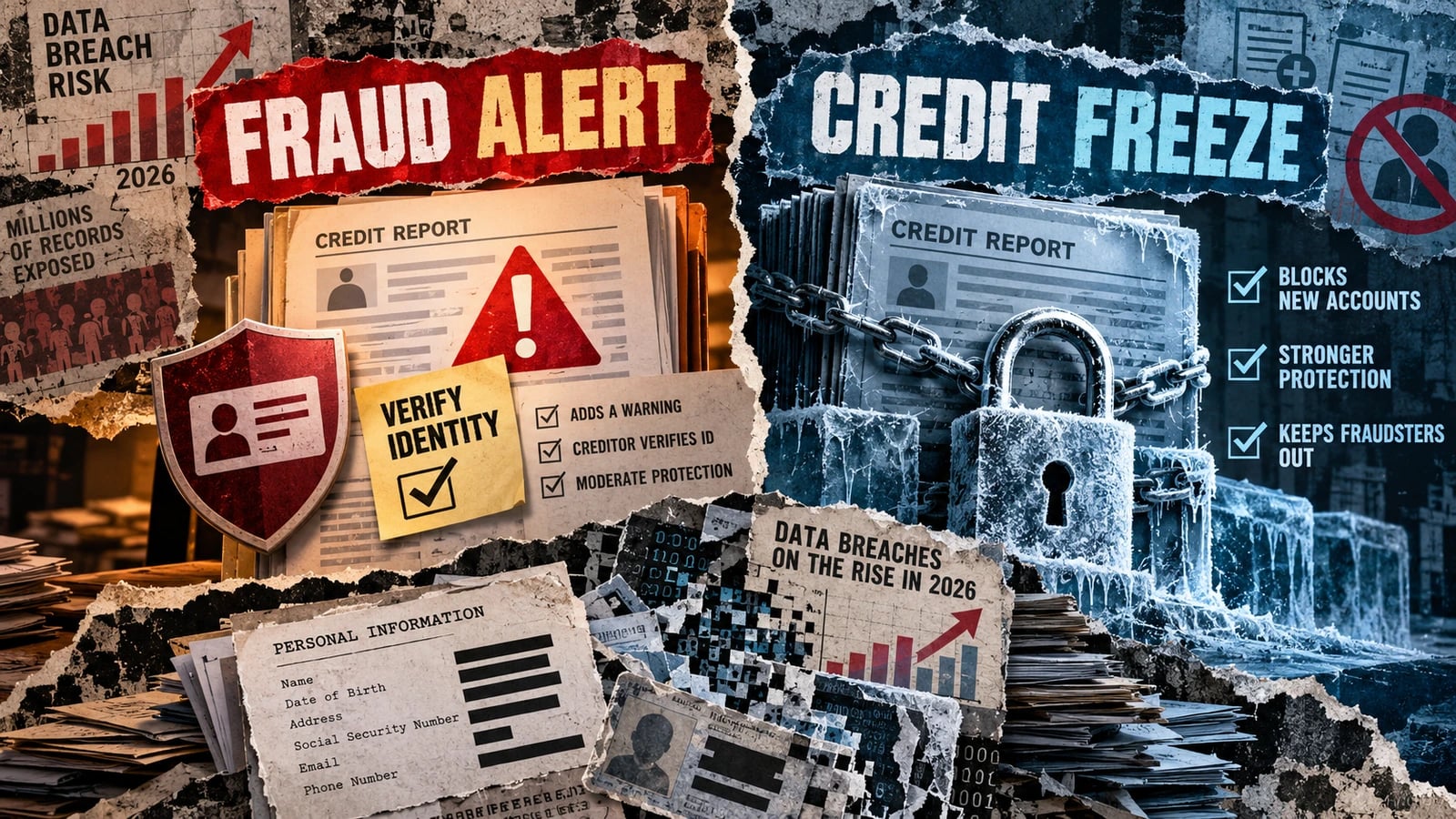
A credit freeze generally prevents prospective creditors from accessing your credit file, making it much harder for criminals to open new credit accounts in your name. A fraud alert keeps your credit report available but tells businesses to take additional steps to verify your identity before approving credit.
Both protections are free under federal law. However, they are not equally strong: a credit freeze offers more protection against new-account fraud, while a fraud alert creates less disruption when you need to apply for credit.
The Identity Theft Resource Center recorded 1,803 data compromises in the first half of 2026. Those incidents generated approximately 471.2 million victim notices—about 58% more than the number issued during all of 2025.
If your personal information has been exposed, understanding the difference between a credit freeze and a fraud alert can help you choose the appropriate response.
Credit Freeze vs. Fraud Alert: The Key Differences
| Feature | Fraud Alert | Credit Freeze |
|---|---|---|
| What it does | Flags your credit file and requires businesses to verify your identity before issuing new credit | Restricts most prospective creditors from accessing your credit report |
| Protection level | Moderate | Strong |
| Duration | One year for an initial alert; seven years for an extended alert; one year for an active-duty alert | Remains until you temporarily lift or permanently remove it |
| Cost | Free | Free |
| Who you contact | One credit bureau, which must notify the other two | Equifax, Experian and TransUnion separately |
| Effect on credit applications | Applications can continue, but identity verification may take longer | You normally must temporarily lift the freeze before applying |
| Best suited for | People who suspect possible exposure and want an added verification step | Anyone who wants the strongest protection against new-account fraud |
How a Fraud Alert Works
A fraud alert is a notice added to your credit report. When a business checks your report in connection with a credit application, the alert tells it to take reasonable steps to confirm that the applicant is really you.
The alert does not prevent a business from accessing your credit report. It adds an identity-verification requirement.
There are three main types of fraud alerts.
Initial Fraud Alert
An initial fraud alert is available to anyone who believes they may be—or may soon become—a victim of fraud or identity theft.
It lasts for one year and can be renewed at no cost. You only need to contact one of the three major credit bureaus. That bureau must notify the other two.
Extended Fraud Alert
An extended fraud alert is available to people who have experienced identity theft and completed an identity theft report, such as a report created through the Federal Trade Commission’s IdentityTheft.gov service.
An extended alert lasts for seven years. It also entitles you to two free credit reports from each of the three nationwide credit bureaus during the 12 months after the alert is placed.
In addition, the bureaus must remove your name from lists used for unsolicited credit and insurance offers for five years, unless you request otherwise.
Active-Duty Alert
An active-duty alert is intended for members of the U.S. military who are deployed or preparing to deploy.
It lasts for one year and can be renewed for the duration of the deployment. It also removes the service member from prescreened credit and insurance offer lists for two years.
The Limitation of a Fraud Alert
A fraud alert depends on the business processing the application to complete the required identity-verification steps properly.
It can discourage or stop some fraudulent applications, but it does not technically prevent access to your credit file. For that reason, it generally offers less protection than a credit freeze.
How a Credit Freeze Works
A credit freeze—also called a security freeze—restricts access to your credit report by most prospective creditors.
Because lenders commonly need to review a credit report before approving a new account, a freeze makes it significantly harder for someone to open a credit card, loan or other credit account in your name.
A credit freeze does not:
- Lower your credit score
- Prevent you from checking your own credit report
- Close or restrict your existing accounts
- Stop you from using your current credit cards
- Prevent fraud involving an existing account
- Stop tax, medical, employment or benefits-related identity theft
Federal law allows you to place, temporarily lift or permanently remove a credit freeze for free.
How Quickly Can You Place or Lift a Freeze?
Federal law establishes deadlines for the credit bureaus to process freeze requests.
- Online or phone freeze request: The bureau generally must place the freeze within one business day.
- Mailed freeze request: The bureau generally must place it within three business days.
- Online or phone lift request: The bureau generally must lift the freeze within one hour.
- Mailed lift request: The bureau generally must lift it within three business days.
You can normally schedule a temporary lift for a particular period. This allows a lender to access your report while you apply for a mortgage, auto loan, credit card or other form of credit.
After the specified period ends, the freeze is restored automatically.
What a Credit Freeze Does Not Block
A credit freeze is powerful, but it does not block every type of access to your credit information.
Depending on the purpose and applicable law, access may still be available to:
- Your existing creditors
- Debt collectors acting on behalf of existing creditors
- Government agencies with legally authorized access
- Courts acting under a court order, warrant or subpoena
- Companies monitoring your credit at your request
- Businesses making prescreened credit or insurance offers
- Certain employers, landlords and insurance companies
A freeze is primarily designed to restrict access connected with new credit applications. It is not a complete identity-theft prevention system.
Credit Lock vs. Credit Freeze
A credit lock may sound like a credit freeze, but the two are legally different.
A credit freeze is a right provided by federal law. A credit lock is a product governed by an agreement between you and a credit bureau.
Credit locks may be easy to switch on and off through an app, but their features, prices and legal terms depend on the provider. Some lock services require a paid subscription or are bundled with credit-monitoring products.
A credit freeze is free and provides protections established by law. For most consumers seeking to restrict access to their credit reports, a freeze is the more clearly defined option.
Why Data-Breach Victims Should Consider a Freeze
The Identity Theft Resource Center reported 1,803 data compromises during the first half of 2026, including 1,394 incidents classified as data breaches involving confirmed unauthorized access.
Those incidents produced approximately 471.2 million victim notices.
Supply-chain attacks were particularly significant. According to the ITRC, 38 initial supply-chain breach events affected a total of 206 organizations and generated approximately 280.6 million victim notices.
In a supply-chain incident, your information may be exposed through a vendor, contractor or technology provider used by an organization you trusted. This means you may be affected even when the company with which you have a direct relationship was not itself breached.
If sensitive information such as your Social Security number, date of birth or financial data has been exposed, a credit freeze is generally the stronger preventive measure.
Which Option Should You Choose?
The appropriate choice depends on the information exposed and the level of protection you want.
| Your situation | Suggested action |
|---|---|
| Your Social Security number or other sensitive identity data was exposed | Freeze your credit with all three bureaus |
| You suspect possible identity theft but are not ready to freeze your reports | Place an initial fraud alert |
| You have confirmed identity theft | Place a credit freeze and consider an extended fraud alert |
| You plan to apply for a mortgage, auto loan or credit card | Keep the freeze and temporarily lift it when needed |
| You want the strongest ongoing protection against new-account fraud | Maintain freezes at all three bureaus |
| You are an eligible deployed service member | Consider an active-duty alert |
| Only a password was exposed | Change the password immediately, enable multifactor authentication and assess whether more sensitive information was also compromised |
A fraud alert may be useful when you want an added verification step without restricting access to your reports. However, a freeze is generally the better choice when your Social Security number or similarly sensitive information has been compromised.
You can also use a fraud alert and credit freeze at the same time.
How to Freeze Your Credit
You must contact each nationwide credit bureau separately:
Use the official bureau websites and confirm that the web address is correct before entering personal information.
The bureaus may ask you to create an online account and verify your identity. Save your account details securely because you will need access when you want to manage or lift the freeze.
What to Do After Placing a Freeze or Fraud Alert
Neither protection replaces regular account monitoring. Take the following additional steps after a breach.
Review Your Credit Reports
Check all three reports for accounts, credit inquiries, addresses or personal details you do not recognize.
Federal law provides free weekly online credit reports through AnnualCreditReport.com, the federally authorized website for reports from Equifax, Experian and TransUnion.
Secure Your Existing Accounts
A credit freeze does not stop criminals from accessing accounts that are already open.
Use unique passwords, enable multifactor authentication and review recent activity on your bank, credit card, email, shopping and payment accounts.
Report Identity Theft
If you discover identity theft, create a recovery plan through IdentityTheft.gov.
An FTC Identity Theft Report can help you dispute fraudulent accounts and request that identity-theft information be blocked from your credit reports. It may also be required when requesting an extended fraud alert.
Watch for Non-Credit Identity Theft
Continue monitoring:
- Bank and credit card statements
- Tax filings and IRS communications
- Health insurance claims and medical statements
- Social Security records
- Unemployment or government-benefit accounts
- Mobile phone and utility accounts
These forms of fraud may occur without a traditional credit check.
The Bottom Line
A fraud alert adds an identity-verification step, but it does not prevent businesses from accessing your credit report.
A credit freeze generally offers stronger protection because it restricts most prospective creditors from obtaining your report. If sensitive identity information has been exposed, freezing your credit at Equifax, Experian and TransUnion is usually the more protective response.
Whichever option you choose, continue monitoring your credit reports and existing accounts. A freeze or fraud alert can reduce the risk of new-account fraud, but neither can stop every form of identity theft.
Disclaimer: This article is for general informational and educational purposes only. It does not constitute personalized financial, legal or identity-theft recovery advice. Requirements and procedures may change, so confirm current instructions with the Federal Trade Commission, Consumer Financial Protection Bureau and the three nationwide credit bureaus.
Frequently Asked Questions
Can I Have Both a Fraud Alert and a Credit Freeze?
Yes. You can place a fraud alert and freeze your credit at the same time.
The freeze restricts access by most prospective creditors, while the fraud alert tells any business that does access your report to verify your identity before issuing new credit.
Does a Credit Freeze Affect My Credit Score?
No. Placing, lifting or removing a credit freeze does not affect your credit score.
How Long Does a Credit Freeze Last?
A credit freeze remains in place until you temporarily lift or permanently remove it. It does not expire automatically.
Can I Freeze My Child’s Credit?
Under federal law, a parent or legal guardian can request a free security freeze for a child under age 16.
The bureaus normally require documents proving the identity of both the child and the parent or guardian, as well as proof of the relationship.
Do I Need a PIN to Manage a Credit Freeze?
The major credit bureaus generally use password-protected online accounts and identity-verification procedures rather than permanent freeze PINs.
The exact process differs by bureau. Keep your login information secure and use the bureau’s official account-recovery process if you lose access.
Will a Freeze Stop Fraud on My Existing Accounts?
No. A freeze is designed mainly to prevent new credit accounts from being opened in your name.
It does not prevent unauthorized transactions, account takeovers or changes to existing accounts. Continue monitoring your accounts and enable transaction alerts where available.
Can I Apply for Credit While My Reports Are Frozen?
Yes, but you will usually need to temporarily lift the freeze first.
Ask the lender which credit bureau it plans to use. You can then lift the freeze at that bureau—or all three bureaus if necessary—for a specified period.
From the Desk
All Personal Finance →More in Personal Finance
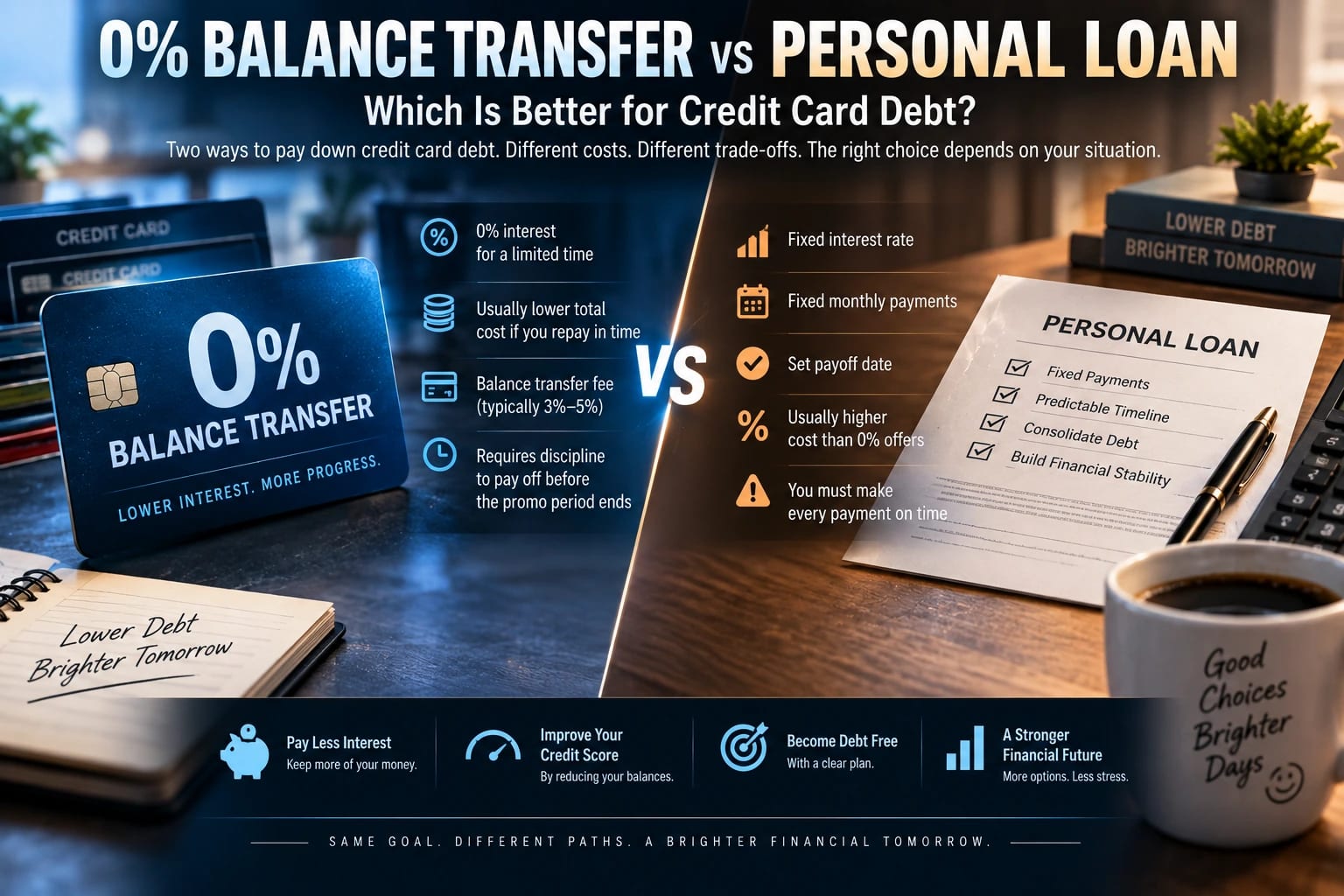
0% Balance Transfer vs Personal Loan: Which Is Better for Credit Card Debt?
A 0% balance transfer may save more if you can repay the debt during the promotional period. A personal loan offers fixed payments and more time. Compare the real costs before choosing.

Fresh Reporting
Browse All Stories →Latest from The Ledger

Tokenized Deposits vs Stablecoins: How Banks Are Bringing Money On-Chain
Tokenized deposits remain bank liabilities, while stablecoins use separately held reserves. Compare their regulation, insurance, settlement and the projects bringing bank money on-chain.


Leave a Comment
Your email address will not be published. Required fields are marked *