••
How the Fed's Rate Decisions Actually Affect Your Wallet: A Complete Guide
A complete guide to how Fed rate decisions move through the prime rate to your credit cards, mortgage, and savings account, with current September 2026 rates for each.
Share Article:
Editorial Illustration · MoneyAllotment
Every six to eight weeks, the Federal Reserve's rate-setting committee meets, and the outcome ripples through mortgages, credit cards, savings accounts, and investment portfolios within days or weeks. Understanding the mechanics behind that ripple effect helps you anticipate changes rather than react to them after your next statement arrives.
How One Rate Decision Reaches Your Accounts
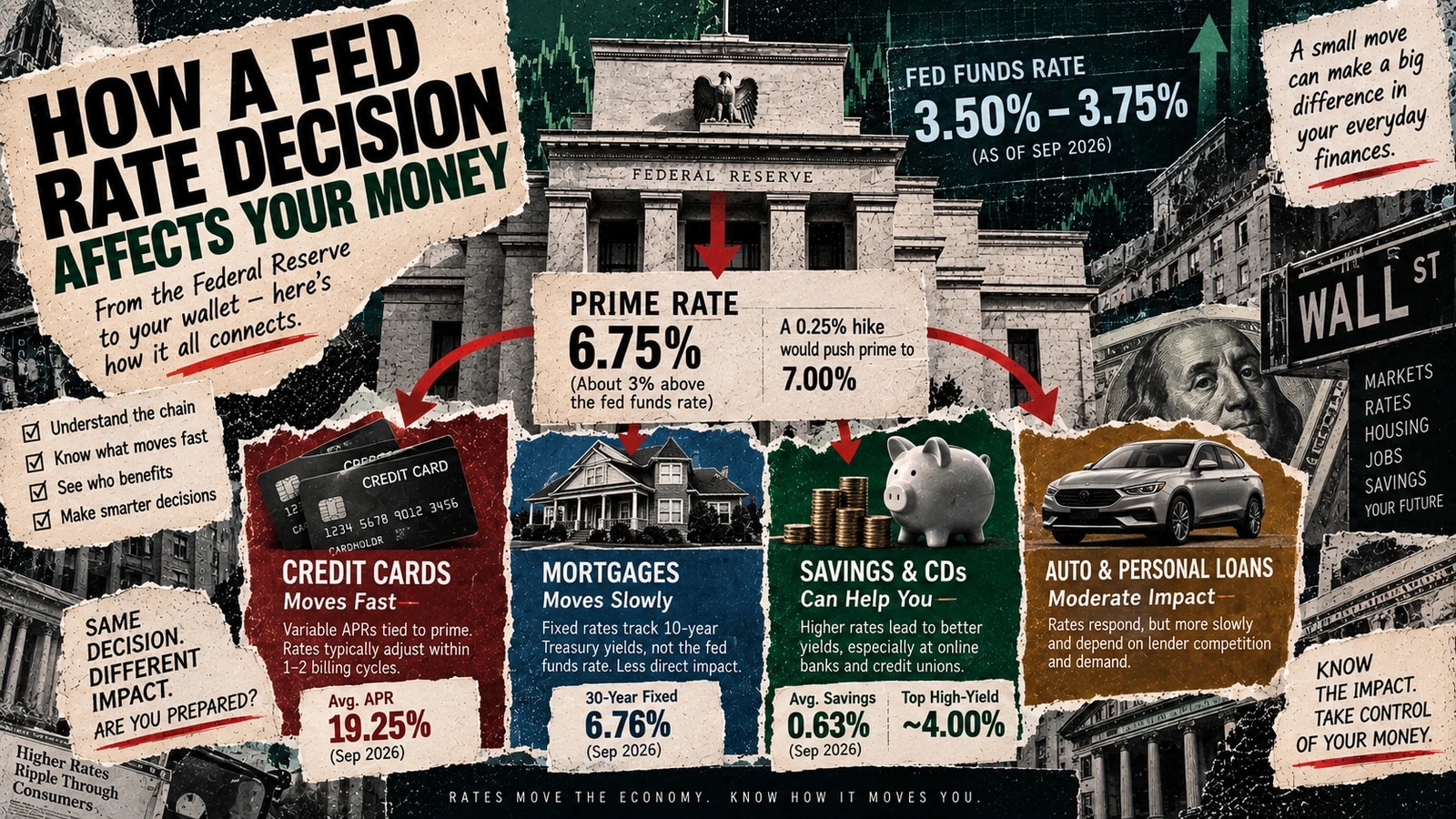
The Federal Open Market Committee sets a target range for the federal funds rate, the rate banks charge each other for overnight loans. As of September 2026, that range sits at 3.50%–3.75%, though the Fed has signaled it is prepared to move again as inflation data warrants.
That single decision doesn't touch your accounts directly. It flows through an intermediate step: the prime rate, the rate banks charge their most creditworthy customers. The prime rate is typically set about three percentage points above the fed funds rate's upper bound. With the fed funds rate at 3.50%–3.75%, the current U.S. prime rate stands at 6.75%, according to Federal Reserve H.15 data. A 25-basis-point Fed move would push prime to 7.00%.
From there, the prime rate becomes the reference point, or index, that banks use to price credit cards, home equity lines of credit, and many personal and auto loans. Lenders add a margin on top of prime based on your credit profile, so your actual rate will differ from the headline number, but it moves in the same direction.
What Moves Fast: Credit Cards and Variable Debt
Credit cards are the most responsive product to a Fed decision. Because most cards carry variable APRs tied directly to the prime rate, issuers typically adjust rates within one to two billing cycles of a Fed move. The average credit card interest rate stood at 19.25% as of September 2026, according to Curinos data, though the Federal Reserve's own long-run series puts the broader average closer to 21%. Rates on individual cards range from under 8% on some secured or promotional products to above 34% on high-risk cards.
Home equity lines of credit work the same way. If yours carries a variable rate tied to prime, expect your payment to adjust almost immediately after a Fed move, since HELOCs typically reset monthly or quarterly.
Auto loans and personal loans respond more slowly and less precisely. They're influenced by the fed funds rate, but lenders also weigh loan demand, funding costs, and competitive positioning, so the pass-through isn't one-to-one.
What Moves Slowly: Mortgages
Mortgages are the exception most people get wrong. Fixed-rate mortgages don't track the fed funds rate at all once they're locked in. New mortgage rates are driven primarily by the 10-year Treasury yield, which reflects investors' longer-term expectations for growth and inflation, not the Fed's short-term policy rate.
That's why mortgage rates can rise even when the Fed holds steady, or stay flat even after a hike. As of mid-September 2026, the average 30-year fixed rate stood at 6.76%, according to Freddie Mac's weekly Primary Mortgage Market Survey, while the 15-year fixed averaged 6.09%. Adjustable-rate mortgages are the exception within mortgages: ARMs typically reset based on SOFR or another market index specified in the loan contract, so they respond to Fed policy more directly, just with a lag built into the reset schedule. (Prime rate, by contrast, is the index most home equity lines of credit use.)
What Helps You: Savings and CDs
Higher rates aren't only bad news. Deposit accounts benefit, though unevenly. The national average savings account yield was just 0.63% APY as of mid-September 2026, according to Bankrate, a figure that has barely moved regardless of Fed policy because most large banks don't need to compete hard for deposits. Checking accounts are worse still, averaging around 0.07%.
The real opportunity sits with high-yield savings accounts and CDs, where online banks and credit unions compete aggressively for deposits. The best high-yield savings accounts were paying close to 4% APY in September 2026, and some promotional CD offers ran even higher. These accounts typically adjust within weeks to a couple of months of a Fed move, though the exact timing varies by institution and product, faster on the way up when banks want your deposits, slower on the way down.
Why the Same Decision Hits People Differently
Whether a Fed decision helps or hurts you depends entirely on your financial position, not just the direction of the move. A borrower carrying a variable-rate credit card balance feels a hike within weeks. A homeowner with a 30-year fixed mortgage locked in at today's rates feels almost nothing directly, though a hawkish Fed can still push Treasury yields higher and affect anyone shopping for a new mortgage. A saver with cash parked at a major bank earning 0.63% sees little benefit from a hike unless they move that money to a competitive high-yield account.
That asymmetry is the practical takeaway. The Fed's decision is a single number, but its effect on your finances depends on which side of the balance sheet you're on: borrower or saver, variable-rate or fixed-rate, actively shopping for competitive yields or leaving cash parked at a legacy bank.
What to Actually Do
Reviewing where your money sits relative to the prime rate is the single most useful exercise after any Fed meeting. Check whether your credit card, HELOC, or personal loan carries a variable rate tied to prime, since those are the accounts that move fastest and most predictably. Compare your savings account's yield against the current high-yield average, since the gap between 0.63% and 4% APY is entirely within your control to close. For mortgage shopping, watch the 10-year Treasury yield rather than the Fed's headline rate, since that's the number actually driving what lenders quote you.
Disclaimer: This article is for informational and educational purposes only and is not personalized financial, investment, or legal advice. Consult a licensed professional for advice specific to your situation.
Frequently Asked Questions
How do Fed rate decisions affect my mortgage rates?
Fed rate decisions influence the prime rate, which in turn affects mortgage rates. When the Fed raises rates, mortgage rates typically increase, leading to higher monthly payments for borrowers.
What is the relationship between the Fed's rate and credit card interest rates?
Credit card interest rates are often tied to the prime rate, which is influenced by the Fed's rate decisions. When the Fed raises rates, credit card interest rates usually rise, impacting your overall borrowing costs.
How often does the Fed make rate decisions?
The Federal Reserve's rate-setting committee meets every six to eight weeks to decide on rate changes. These decisions can significantly affect various financial products, including loans and savings accounts.
From the Desk
All Personal Finance →More in Personal Finance
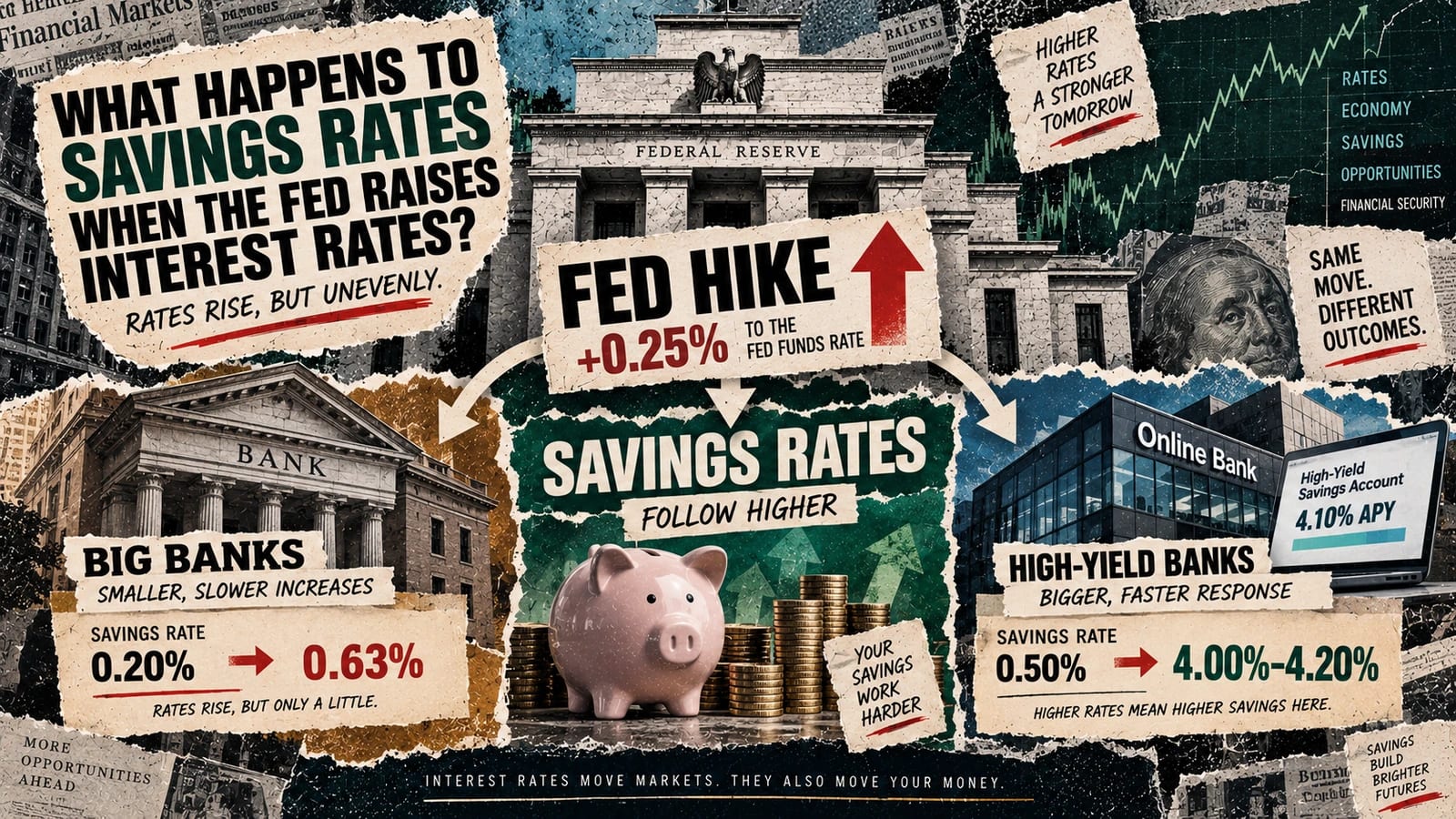
What Happens to Savings Rates When the Fed Raises Interest Rates?
A Fed rate hike does not automatically raise your savings APY. This guide explains deposit beta, why big banks lag, and how to capture higher yields when the Fed tightens.
Fresh Reporting
Browse All Stories →Latest from The Ledger
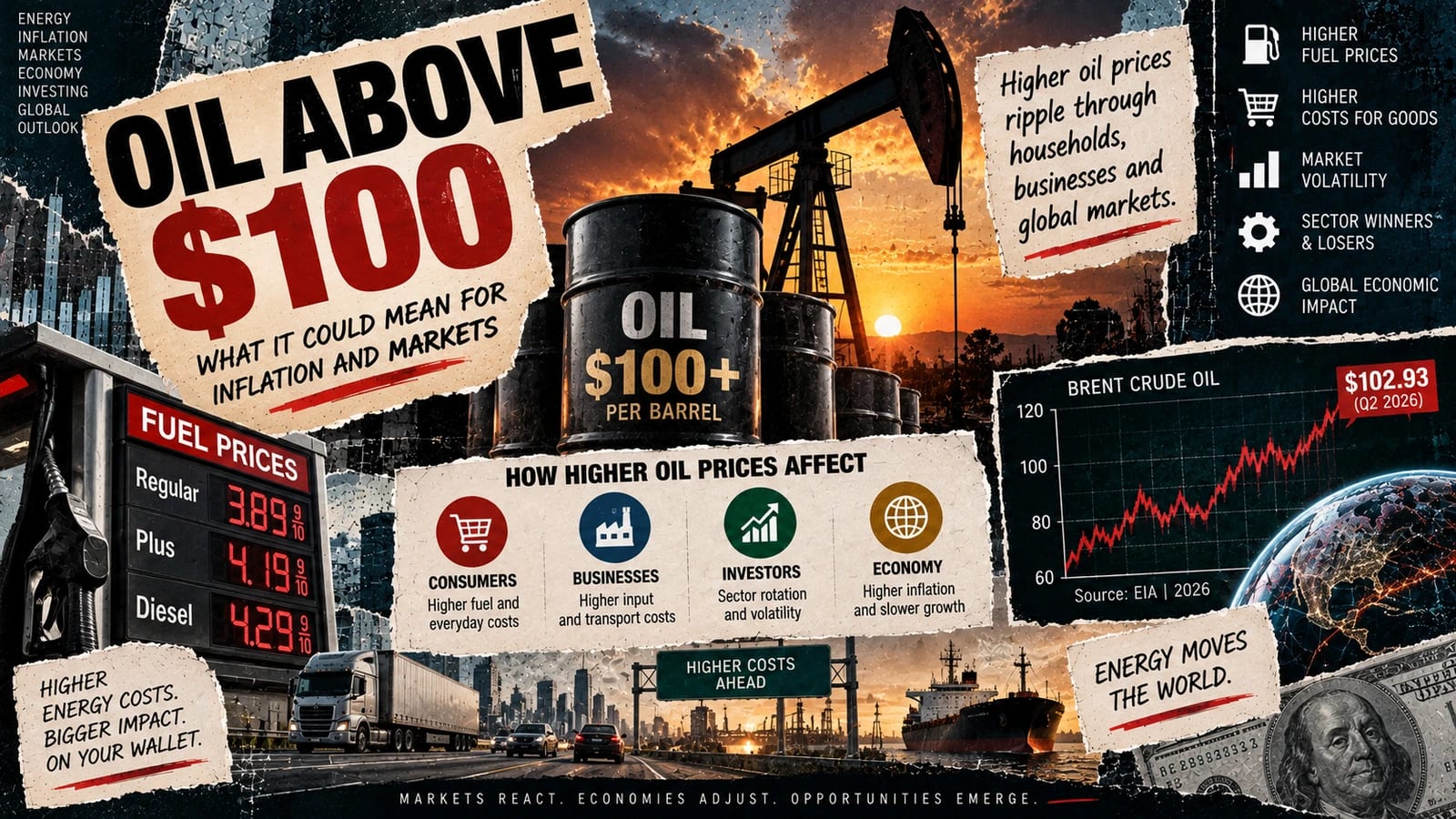
Oil Above 100 USD Inflation Pressures and Market Shifts
Oil above USD 100 per barrel raises inflation, pressures consumer spending, and reshapes sector performance. This guide explains the transmission channels, Fed dilemma, and practical implications.


Leave a Comment
Your email address will not be published. Required fields are marked *