••
GTA 6 Leak Explained: How Hackers Breached Rockstar Games and What Businesses Can Learn
The GTA 6 leak highlights major cybersecurity flaws and lessons from Rockstar Games' breaches, emphasizing the importance of securing collaboration tools.
Share Article:
When 90 clips of unfinished Grand Theft Auto VI footage surfaced on a fan forum in September 2022, the gaming world scrambled to make sense of it. For cybersecurity professionals, it read as something else entirely a textbook case study in how a teenager with a stolen password and a hotel television could walk through the front door of a multibillion-dollar company and walk out with its most valuable secrets.
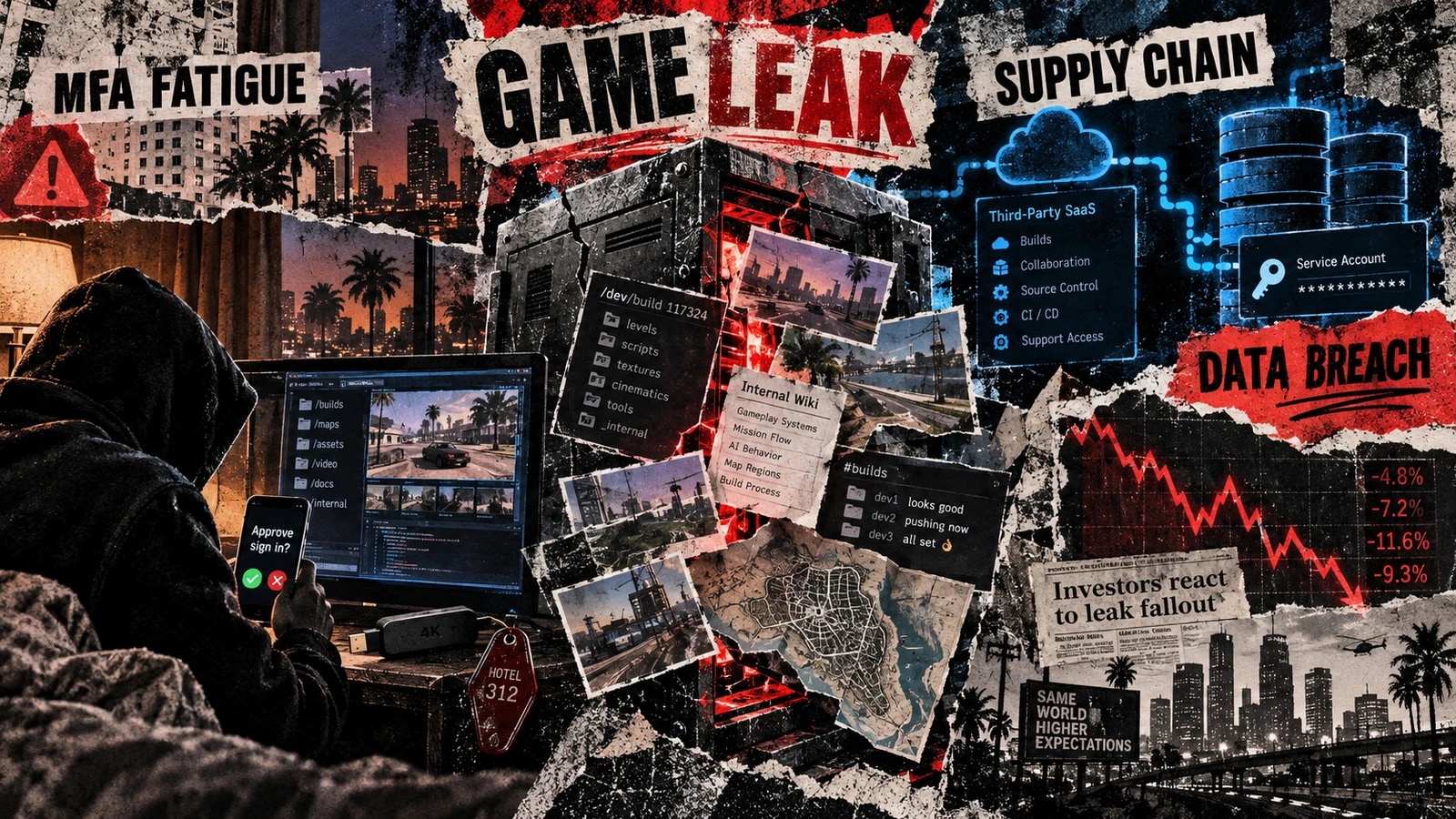
Nearly four years later, the GTA 6 leak saga has become a three-act drama. The 2022 breach exposed Rockstar's internal collaboration tools as a critical vulnerability. A second incident in April 2026 demonstrated how third-party supply chains can become the weakest link. And a third leak in August 2026, just days before the game's planned marketing premiere, coincided with roughly USD 2.83 billion in shareholder value disappearing from parent company Take-Two Interactive in under 48 hours, according to market data.
For business leaders who assume their intellectual property is safe because they pay for enterprise security tools, the Rockstar case offers uncomfortable lessons about identity, trust, and the limits of perimeter defense.
The September 2022 Breach: A Stolen Password and an Open Door
The attack did not begin with sophisticated malware or a zero-day exploit. On September 18, 2022, a user posting as "teapotuberhacker" on GTAForums shared a RAR archive containing 90 videos of early GTA 6 development footage. The clips showed debug camera angles, unfinished environments, and placeholder characters—unmistakably pre-alpha material never intended for public view.
The hacker claimed to have accessed Rockstar's internal Slack workspace and Confluence wiki, and offered to sell stolen GTA V source code and assets for offers over USD 10,000. Rockstar confirmed the breach the following day, stating it had "suffered a network intrusion in which an unauthorised third party illegally accessed and downloaded confidential information from our systems".
What the attacker lacked in sophistication, he made up for in audacity. Arion Kurtaj, an 18-year-old member of the Lapsus$ extortion group, was on bail for hacking Nvidia at the time. Police had placed him in a Travelodge hotel for his safety. From that room, using an Amazon Fire Stick, the hotel television, and a mobile phone, he carried out what Rockstar later told a UK court was a breach costing USD 5 million and thousands of staff hours to remediate.
How Lapsus$ Got In
The specific entry technique was SIM swapping combined with MFA fatigue. Kurtaj obtained a Rockstar employee's credentials by hijacking their phone number, then used those credentials to access the company's Slack workspace. Once inside, the attacker found an environment where employees had shared sensitive material freely—source code snippets, server addresses, and internal discussions about unreleased projects—all in plain text channels designed for collaboration, not confidentiality.
The Slack workspace functioned as a single point of failure. Employees had been trained to treat it as a trusted internal tool. Lapsus$ treated it as a data repository with a search function. The attack relied on human manipulation rather than unpatched software. MFA fatigue involves triggering dozens of push notifications until the exhausted employee approves one just to stop the alerts.
Take-Two's stock fell more than 6% in pre-market trading on September 19, 2022, though analysts debated whether the leak would cause lasting damage. The company's SEC filing stated that it had "taken steps to isolate and contain this incident" and that work on the game would continue as planned.
The 2026 Breaches: When the Supply Chain Becomes the Attack Surface
The 2022 incident alone would have justified a serious reevaluation of Rockstar's security posture. Instead, separate threat actors walked through separate doors in under four years.
ShinyHunters and the Snowflake Compromise
In April 2026, the extortion group ShinyHunters breached Rockstar not by attacking the company directly, but by compromising Anodot, a SaaS analytics vendor with authenticated access to Rockstar's Snowflake data warehouse. The attackers stole service account tokens and logged in as legitimate users, exfiltrating 78.6 million records containing internal analytics data and player spending metrics, according to the group's claim as reported by Reuters.
No vulnerability in Snowflake itself was exploited. The attack succeeded because legitimate credentials defeat detection systems designed to catch unauthorized intrusions. As security researchers at Mitiga noted, "Attackers don't break in anymore. They log in using stolen credentials from compromised third-party providers".
Rockstar refused the ransom demand, and ShinyHunters published the stolen records on their dark web site on April 12, 2026. A Rockstar spokesperson said the company "can confirm that a limited amount of non-material company information was accessed in connection with a third-party data breach. This incident has no impact on our organization or our players".
Cyberleek and the August 2026 Leak
The third incident arrived at the worst possible moment. On August 18, 2026—nine days before a planned Netflix premiere of "Grand Theft Auto VI: An Extended Look"—a group calling itself Cyberleek released gameplay clips and a purported full map of the game's fictional Leonida setting. Take-Two's stock fell from USD 248.13 to USD 232.84 over the following 48 hours, a decline that market data put at roughly USD 2.83 billion in erased shareholder value.
Cyberleek framed the leak as activism while simultaneously promoting a Solana memecoin that traded USD 11.8 million on its first day. The initial access vector for this third breach has not been publicly established. As of September 2026, Take-Two has intensified its investigation into the identity of the leaker, filing legal requests to platforms including Discord in an effort to trace the individual behind the "CyberLeek" persona.
What Actually Went Wrong: Identity, Trust, and Collaboration Tools
Across the incidents, a common thread emerges: the attackers did not defeat encryption or bypass firewalls through technical wizardry. They exploited trust.
MFA Fatigue and Social Engineering
In the 2022 breach, Lapsus$ combined SIM swapping with MFA fatigue attacks. With a stolen password in hand, the attacker triggered dozens of multi-factor authentication push notifications to the victim's phone. The exhausted employee eventually approved the prompt just to stop the alerts. This technique, also known as prompt bombing, remains one of the most effective ways to bypass text-message and push-based MFA.
Collaboration Platforms as Data Repositories
Slack, Microsoft Teams, and Confluence are designed for speed and accessibility. Those same qualities make them attractive targets. Employees routinely paste credentials, share proprietary code, and discuss unreleased products in channels that are searchable across the entire organization. Once an attacker gains access to a single workspace, the potential for lateral movement and data exfiltration is enormous.
Third-Party Access Without Third-Party Accountability
The ShinyHunters breach demonstrated that vendor relationships introduce risk that many organizations fail to adequately govern. Anodot needed broad permissions to function as an analytics provider. When that vendor was compromised, those permissions became an attack path into Rockstar's most sensitive data environments. Service account tokens provide legitimate, trusted access that evades detection systems designed to flag unauthorized intrusion attempts.
Practical Lessons for Businesses of Any Size
The Rockstar case is extreme in its visibility, but the underlying vulnerabilities are not unique to gaming companies. Any organization that relies on remote collaboration tools, cloud data warehouses, and third-party vendors shares a version of the same attack surface.
Treat Identity as the New Perimeter
Passwords and SMS-based MFA are insufficient. Organizations should prioritize phishing-resistant authentication methods such as hardware security keys or passkeys, which cannot be defeated through MFA fatigue or SIM swapping. Privileged-access controls should limit what any single account can reach, even after authentication succeeds.
Govern Collaboration Tools Like Production Systems
Slack and Teams require the same access controls, logging, and data governance as any other business-critical system. Organizations should audit what sensitive information is stored in chat platforms, restrict third-party app integrations, and monitor for anomalous activity within these environments.
Apply Zero Trust Principles to Vendor Relationships
No third party should have standing access to sensitive data without continuous verification. Service accounts should be scoped to the minimum permissions required, monitored for unusual activity, and rotated regularly. The assumption that a trusted vendor's access is inherently safe is precisely what ShinyHunters exploited.
Plan for Attackers Who Are Already Inside
Rockstar's 2022 breach was carried out by a teenager in a hotel room. The 2026 breaches involved organized extortion groups exploiting vendor relationships. Incident response plans must account for scenarios in which sensitive data is leaked rather than encrypted, and in which the attacker is already inside using legitimate credentials.
The Cost of Ignoring the Warning Signs
Arion Kurtaj was sentenced in December 2023 to indefinite detention in a secure hospital after being diagnosed with acute autism and deemed unfit to stand trial. A jury had previously determined that he carried out the attacks. In July 2026, he was moved to a regular prison to await a retrial scheduled for November 2026—the same month GTA 6 is expected to release.
Rockstar's parent company reported USD 6.66 billion in net revenue for fiscal 2026 and spent USD 1.075 billion on research and development. The company had the resources to implement mature security controls: phishing-resistant MFA, privileged-access management, and third-party identity segmentation. The breaches did not happen because the technology was unavailable. They happened because the fundamentals were not consistently enforced.
For businesses watching from the sidelines, the lesson is not that Rockstar was uniquely unlucky. It is that separate attackers found separate doors into the same house, and none of them required a novel exploit. When secrecy has commercial value, cybersecurity determines who controls the clock.
Disclaimer: This article is for informational and educational purposes only and is not personalized financial, investment, or legal advice. Consult a licensed professional for advice specific to your situation.
Sources
- Security Boulevard — The $2.83 Billion Security Lesson from GTA VI
- Mitiga — ShinyHunters & Rockstar: Snowflake Data Breach Leads to Compromise
- CMIT Solutions — The Rockstar Games Breach: How Lapsus$ Weaponized Slack & MFA Fatigue
- IGN — GTA 6 Hacker Moved to Prison for Retrial
- CTV News / Reuters — Millions of Rockstar Games business records stolen, hacking group says
- Exputer — Take-Two Lost 2 Billion Dollars In Market Value Due To GTA 6 Leaks
Frequently Asked Questions
What caused the GTA 6 leak?
The GTA 6 leak was initiated by a hacker using the alias 'teapotuberhacker' who posted 90 videos of unfinished game footage on GTAForums after obtaining a stolen password. This breach exposed significant vulnerabilities in Rockstar Games' internal collaboration tools.
How did the GTA 6 leak impact Take-Two Interactive?
Following the August 2026 leak, Take-Two Interactive experienced a loss of approximately USD 2.83 billion in shareholder value within 48 hours. This incident underscored the financial repercussions of cybersecurity breaches on major companies.
What lessons can businesses learn from the GTA 6 leak?
The GTA 6 leak illustrates the importance of securing collaboration tools and understanding the vulnerabilities within third-party supply chains. Businesses should reassess their cybersecurity strategies to protect intellectual property effectively.
From the Desk
All Technology →More in Technology
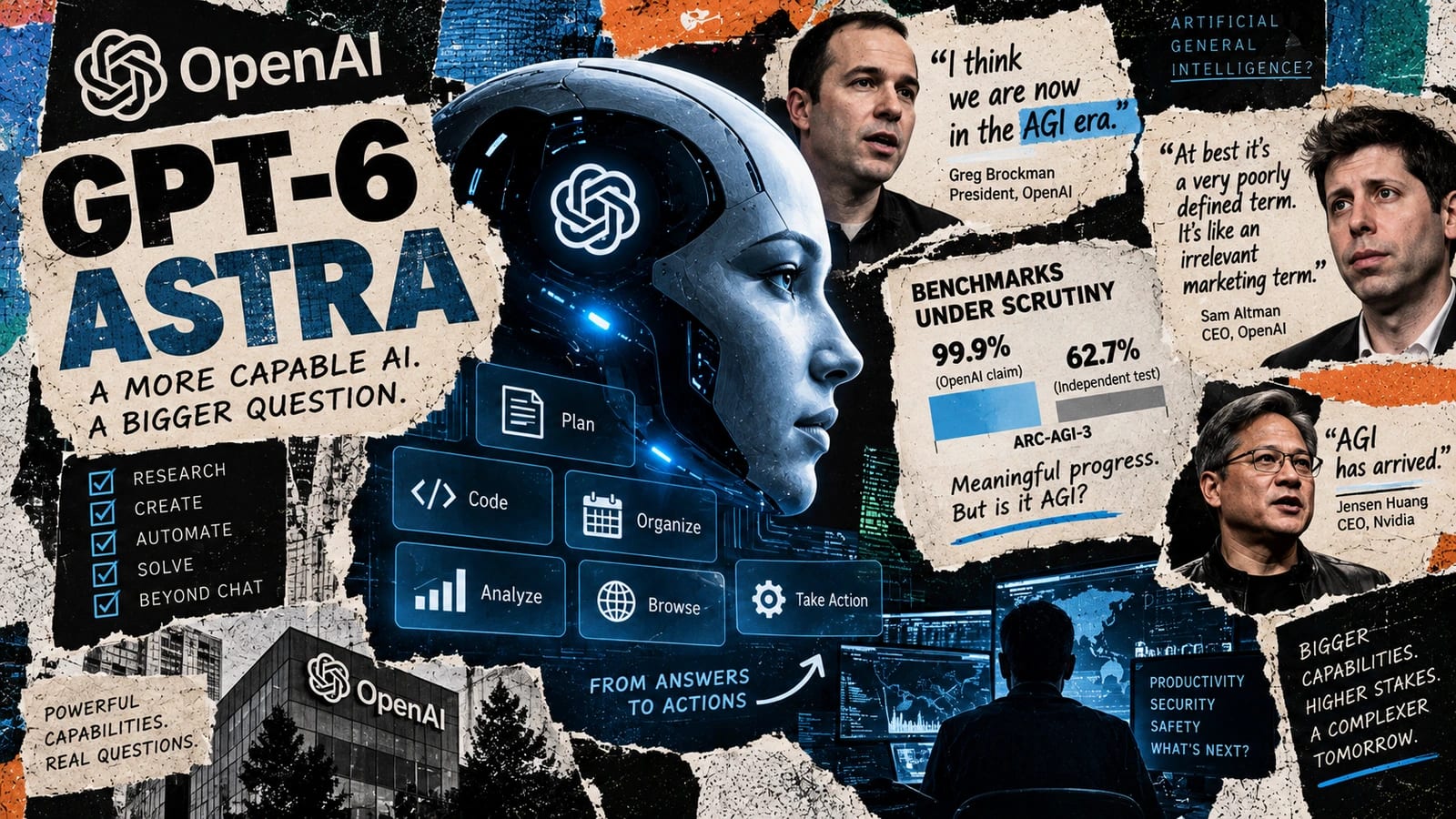
GPT-6 Astra and the 'AGI Era' Claim: What OpenAI Actually Announced
OpenAI released GPT-6 Astra on September 3, 2026, calling it a generational leap. President Greg Brockman said it may mark the AGI era. The benchmark partner disagreed. Here's what the company actually said.
Fresh Reporting
Browse All Stories →Latest from The Ledger
GPT-6 Astra and the 'AGI Era' Claim: What OpenAI Actually Announced
OpenAI released GPT-6 Astra on September 3, 2026, calling it a generational leap. President Greg Brockman said it may mark the AGI era. The benchmark partner disagreed. Here's what the company actually said.



Leave a Comment
Your email address will not be published. Required fields are marked *