••
Bitcoin Recovery: From $58,000 to $80,000 in September 2026
Bitcoin recovery saw a rise from USD 58,000 to USD 80,000 by mid-September 2026, driven by a short squeeze and ETF inflows. What lies ahead?
Share Article:
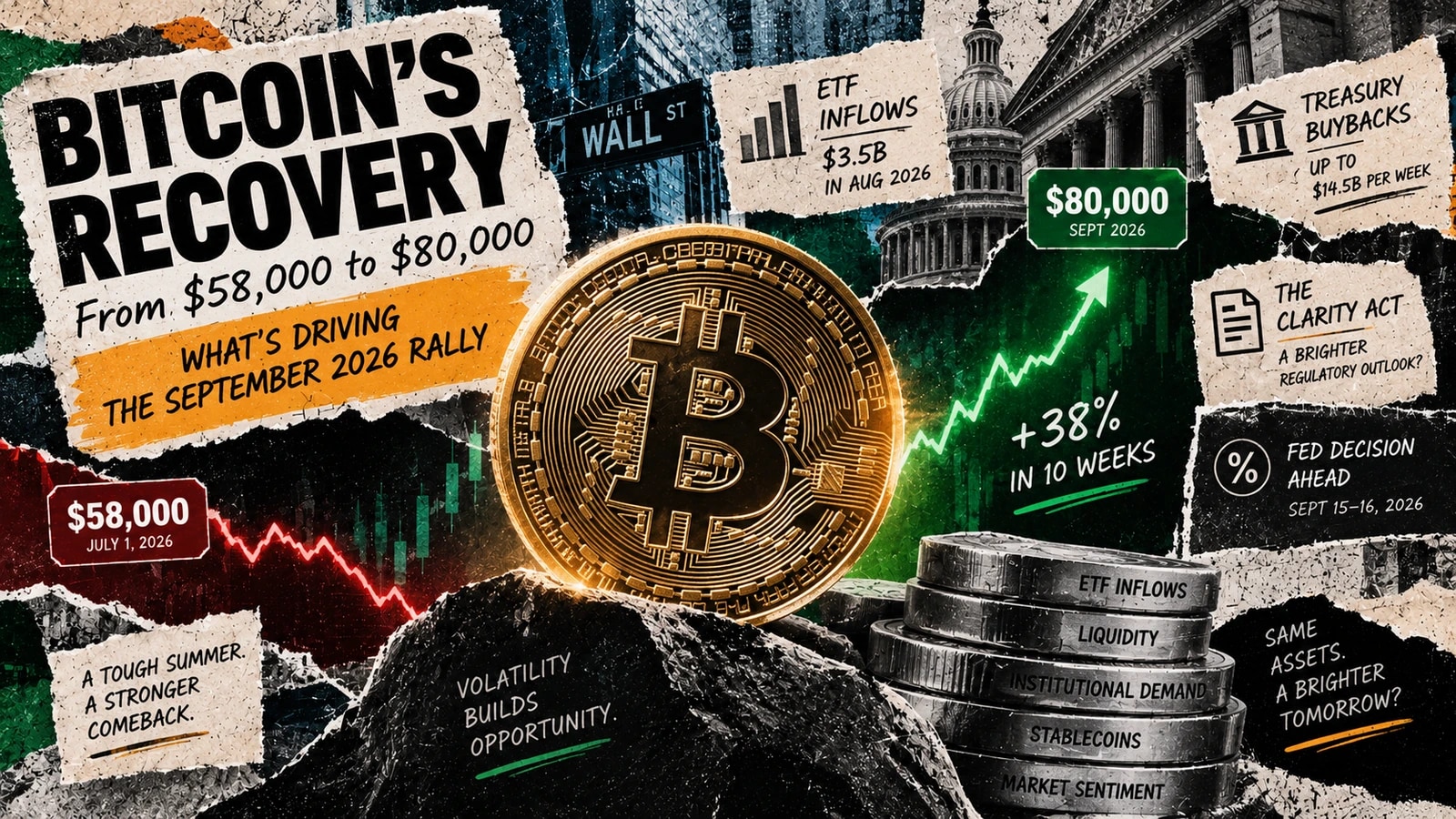
Bitcoin has climbed from a July low near USD 58,000 to roughly USD 80,000 by mid-September 2026, a gain of about 38% in ten weeks. The recovery rests on a short squeeze, a Treasury liquidity injection, and a burst of ETF inflows. Whether it holds depends on a Fed decision on September 16.
From USD 57,800 to USD 80,000 in Ten Weeks
The bottom came on July 1, 2026. Bitcoin briefly dipped below USD 58,000, touching roughly USD 57,950, its lowest level since September 2024. The drop capped a brutal stretch: the asset had fallen more than 50% from its all-time high of USD 126,272, set in October 2025.
Buyers did not rush in. On-chain data showed weak accumulation during the July decline, with HODL Waves data suggesting a single large holder may have influenced the price action. Two analysts warned in September that the July low could not be confirmed as a cycle bottom.
Then August changed the story. Bitcoin rallied through USD 70,000, then USD 75,000, then USD 80,000. By late August it had touched roughly USD 81,000, a three-month high. The move from the summer lows represented a gain of approximately 23% to 38% depending on the starting point.
The Short Squeeze That Did the Heavy Lifting
Much of the August rally came from forced buying, not fresh conviction. Between USD 1.4 billion and USD 4 billion in short positions were liquidated during the ascent, making it one of the largest short squeezes in recent Bitcoin history. Traders betting on lower prices were forced to close their positions, effectively becoming involuntary buyers.
Analysts at Glassnode and Bitfinex pointed to exactly this dynamic. The speed of Bitcoin's climb owed more to forced buying than to organic accumulation. Open interest in Bitcoin perpetual futures fell to 587,600 BTC by August 25, a five-month low, confirming that leveraged positions were being flushed out.
The short squeeze explained the speed. It did not explain the floor.
ETF Inflows Returned in Force
Spot Bitcoin ETFs in the United States drew USD 3.5 billion in net inflows during August 2026, the strongest month since September 2025. July had brought just USD 172 million, according to Nasdaq.
The single biggest day came on September 3. US spot Bitcoin ETFs recorded USD 730.9 million in net inflows, the largest daily total since January 14. BlackRock's IBIT captured about USD 454 million of that, roughly 62% of the day's flows. Fidelity's FBTC added USD 74 million, and ARK's ARKB brought in USD 138 million.
The three-week stretch through early September produced USD 3.8 billion in cumulative net inflows, the strongest run of 2026. BlackRock bought 1,404.5 BTC for its ETF on September 2, worth about USD 109.35 million.
The flows were uneven, though. September 1 saw USD 236 million in net outflows, with IBIT alone shedding USD 201 million. Inflows returned the next day. The swing from Tuesday's outflows to Thursday's inflows exceeded USD 960 million. Demand concentrated in bursts, not a steady march.
Treasury Buybacks Injected Liquidity
On September 7, the US Treasury entered the active phase of a debt buyback program worth up to USD 14.5 billion per week. The bulk of the purchases landed on September 9. The Treasury accepted USD 5.187 billion in long-dated bonds on September 10.
The program aimed to put downward pressure on long-term yields and create a more accommodating environment for risk assets. Analysts and traders positioned for the buyback to support Bitcoin's push through USD 80,000.
The yield response was not cooperative. The 10-year Treasury yield stood at 4.95% on September 10, pressing toward 5%. The 30-year sat at 5.24%. Liquidity helped. Lower yields did not follow.
The Regulatory Bet: The Clarity Act
Senate Republicans circulated a revised Digital Asset Market Clarity Act on September 10, adding rules for decentralized finance protocols and clarifying how credit unions handle crypto. Senator Cynthia Lummis said the new text carried over 100 Democrat-requested changes.
The bill's fate remained uncertain. The Senate was set to vote on September 15 on whether to begin debate. Mike Novogratz warned that if the bill did not advance by that date, US digital asset regulation could face long-term delays.
The White House crypto summit, where President Donald Trump hosted industry leaders to discuss the Clarity Act, had already added fresh optimism about a more supportive regulatory environment. The SEC's proposed "Regulation Crypto Assets" framework reinforced that sentiment.
Stablecoins, Not Corporate Treasuries, Drove the Marginal Bid
The buying pressure behind the rally came from stablecoin conversions, not corporate stock issuance. Anthony Pompliano noted on September 9 that the marginal bid was coming from stablecoin swaps rather than companies issuing equity to buy Bitcoin.
The 90-day Stablecoin Supply Ratio Oscillator reached 3.74 on August 21, entering the "strong stablecoin purchase demand" zone and nearing the November 2024 peak of about 4.00. The metric cooled in September, but the shift mattered: this rally was not driven by MicroStrategy-style corporate treasury purchases.
On-Chain Data Shows Sellers Backing Off
Sell-side risk fell to 7 basis points per day in September, down from 16 in August, according to Glassnode's September 9 report. That was a one-month low. Long-term holders slowed profit-taking. More than 71% of Bitcoin's circulating supply was in profit, close to the historical average of 74.7%.
Large exchange deposits stayed muted even as Bitcoin held near USD 80,000. Roughly 1.07 million BTC was acquired between USD 83,000 and USD 86,000, a band that could become resistance if the price climbs back toward it.
What Could Break the Rally
The Federal Reserve meets September 15–16, with a policy decision and a Summary of Economic Projections due on September 16. Entering the meeting, the Committee had not signaled its outcome. The July 29 FOMC meeting held the federal funds target range at 3.5% to 3.75% by a 9–3 vote, with three dissenters favoring a quarter-point increase.
Traders assigned an 86% probability to a quarter-point rate increase on September 16, a repricing that put Bitcoin's recent gains directly in the path of the FOMC decision. A hike would raise the cost of capital and pressure risk assets broadly.
The rally's durability is an open question. Analysts at Glassnode and Bitfinex cautioned that Bitcoin's move looked more like a catching-up trade than the opening act of a new bull market. The asset spent months underperforming other risk assets during the summer selloff. Much of the rally simply recovered ground that was lost.
The USD 81,000 to USD 83,000 range stands as immediate resistance. A confirmed breakout could open the door to USD 85,000 to USD 90,000. The high USD 70,000s have served as a consolidation zone where buyers have stepped in. Support sits around USD 77,000 to USD 78,000.
Disclaimer: This article is for informational and educational purposes only and is not personalized financial, investment, or legal advice. Consult a licensed professional for advice specific to your situation.
Sources
- Investing.com — Bitcoin Holds USD 79,000 as Markets Reprice Inflation and Rate Risk
- Business Standard — Record High in Sight? Decoding Bitcoin's 24% Rally in a Month & Outlook
- Coinpaprika — BlackRock's IBIT Leads Bitcoin ETFs to Their Biggest Day Since January
- KuCoin — Bitcoin, ETH, XRP Face Fed Vote as Treasury Yields Near 5%
- KuCoin — Bitcoin Struggles to Sustain Above USD 80,000 Amid Fluctuating US Demand
Frequently Asked Questions
What caused the Bitcoin recovery in September 2026?
The Bitcoin recovery in September 2026 was driven by a short squeeze, Treasury liquidity injections, and significant ETF inflows. These factors contributed to a rise from a low of approximately USD 58,000 to around USD 80,000.
How much did Bitcoin increase from July to September 2026?
Bitcoin increased by about 38% from its July low of near USD 58,000 to roughly USD 80,000 by mid-September 2026. This recovery was marked by a rally through key price levels, including USD 70,000 and USD 75,000.
What is a short squeeze in the context of Bitcoin?
A short squeeze occurs when traders who bet against an asset are forced to buy back shares to cover their positions as prices rise. In August 2026, between USD 1.4 billion and USD 4 billion in short positions were liquidated, contributing to Bitcoin's price surge.
From the Desk
All Crypto →More in Crypto

Reform UK Receives Record GBP 72 Million From Two Crypto Billionaires in 48 Hours
Ben Delo and Christopher Harborne each gave Reform UK GBP 36 million in September 2026 — a record combined GBP 72 million paid in cash, not crypto, amid a UK-wide ban on crypto political donations and separate investigations into the party's finances.

Fresh Reporting
Browse All Stories →Latest from The Ledger
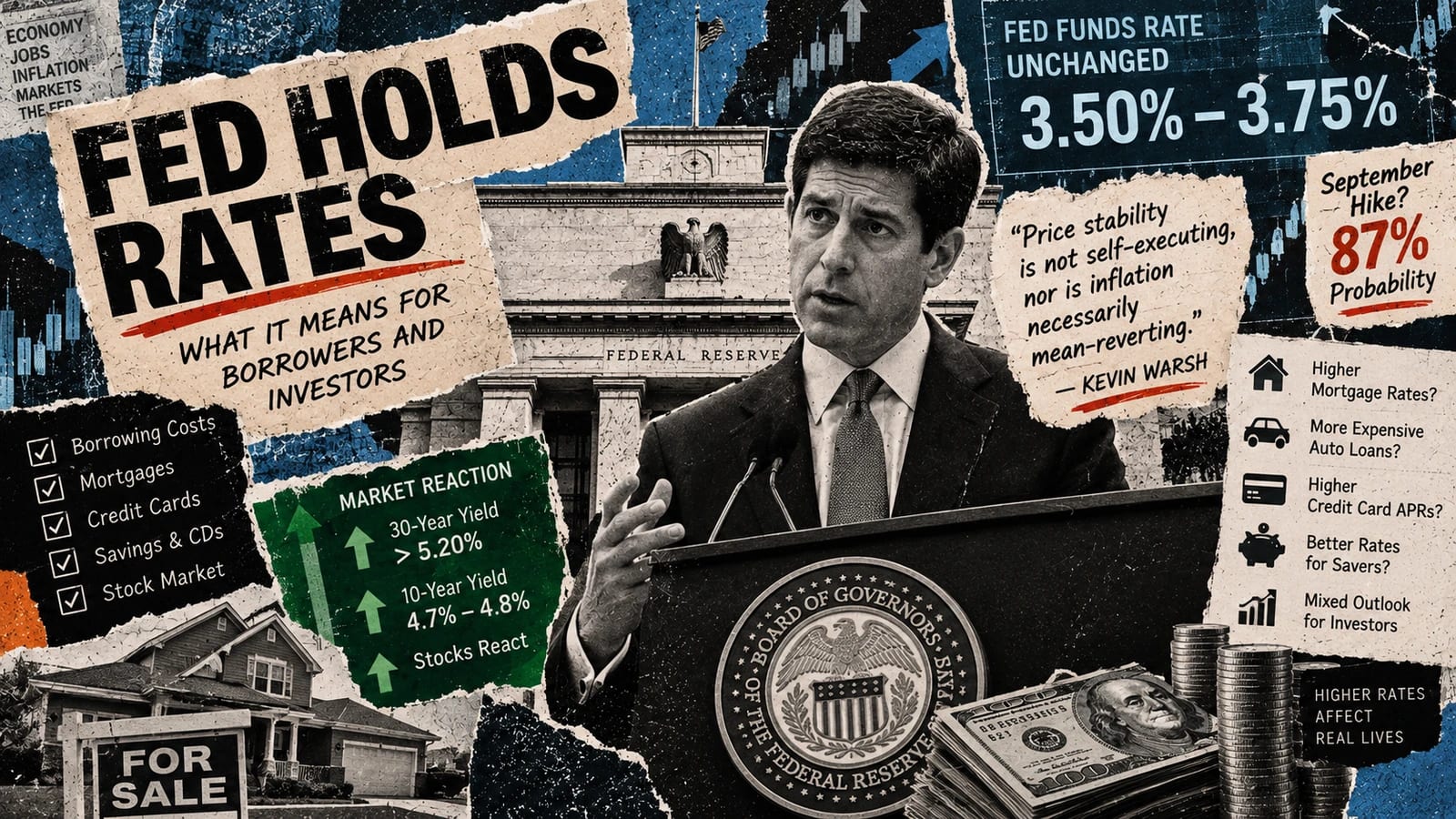
Federal Reserve Holds Rates Steady: Implications for Borrowers
The Fed held rates at 3.50%–3.75% for a fifth straight meeting in July 2026, but three dissents and a rising probability of a September hike signal the pause may be ending. Here's what it means for mortgages, credit cards, savings, and portfolios.





Leave a Comment
Your email address will not be published. Required fields are marked *