How to Learn a New Skill Faster in 2026: 10 Practical Tips
Learning a new skill does not require extraordinary talent. A clear goal, deliberate practice, useful feedback and a consistent learning routine can make the process more effective.

How to Learn a New Skill Faster: A Practical Guide for 2026
Learning a new skill can feel difficult at first. Whether you want to learn a language, play an instrument, improve your cooking, understand personal finance, become better at public speaking, develop a professional skill or take up a new hobby, the process can seem slow when you do not have a clear method.
The good news is that effective learning does not depend entirely on natural talent.
A better approach is to understand how to practice, how to remember information and how to turn knowledge into a repeatable skill.
This is becoming increasingly important as work and everyday life change quickly. The World Economic Forum's Future of Jobs Report 2025 found that employers expect around 39% of workers' existing skill sets to change by 2030, while curiosity and lifelong learning, analytical thinking, creative thinking and adaptability are expected to remain increasingly important.
So how can you actually learn something new more efficiently?
Start With One Clear Goal
The first step is to define exactly what you want to learn.
"Learn Spanish" is a broad goal.
"Hold a 10-minute basic conversation in Spanish within three months" is much more specific.
The same applies to other skills.
Instead of saying:
Learn photography
you could aim to:
Take and edit five well-composed photographs using manual camera settings.
Instead of:
Learn cooking
you could aim to:
Prepare ten basic meals without relying on a recipe.
A specific outcome gives your practice direction and makes progress easier to measure.
Break the Skill Into Smaller Parts
Large skills are usually collections of smaller skills.
For example, learning to play guitar involves:
Learning chords Developing finger coordination Understanding rhythm Reading chord diagrams Practicing transitions Playing complete songs
Learning public speaking could involve:
Organizing ideas Speaking clearly Controlling pace Using body language Managing nervousness Answering questions
Breaking a skill into components makes it less overwhelming and helps identify exactly what needs practice.
Instead of spending an hour vaguely "learning guitar," you can spend 20 minutes practicing chord transitions and another 20 minutes playing a song.
That is much easier to evaluate.
Practice the Skill Instead of Only Studying It
One of the most common learning mistakes is confusing exposure with learning.
Watching ten videos about photography is not the same as taking photographs.
Reading about swimming is not the same as getting into a pool.
Reading about investing is not the same as learning to analyze financial information.
Information matters, but skills develop through active practice.
Your learning routine should therefore contain a meaningful amount of doing.
A useful pattern is:
Learn → Practice → Get Feedback → Correct → Repeat
This cycle works across many different fields.
Use Active Recall
Another useful learning technique is active recall.
Instead of repeatedly reading information, close the book, video or notes and try to remember what you just learned.
For example, after studying five new vocabulary words, put the list away and try to recall them without looking.
After learning a financial concept, explain it from memory.
After watching a cooking tutorial, try to describe the process without replaying the video.
The important part is that your brain has to retrieve the information rather than simply recognize it when it appears on the page.
This can make practice more demanding, but that difficulty is useful because it forces you to actively retrieve what you know.
Space Out Your Practice
Trying to learn everything in one long session can be tempting, especially before an exam or when you are excited about a new hobby.
A more sustainable approach is to spread practice over multiple sessions.
For example:
Monday: 30 minutes Tuesday: 30 minutes Thursday: 30 minutes Saturday: 45 minutes
The exact schedule is less important than maintaining regular exposure and practice.
Spreading learning across time also makes it easier to identify what you actually remember rather than relying on familiarity immediately after studying.
For most people, a consistent routine is more useful than occasional marathon sessions.
Get Feedback Early
Practice without feedback can reinforce mistakes.
Imagine someone learning tennis who repeatedly uses incorrect technique without anyone correcting them. After several months, the incorrect movement may become habitual.
The same principle applies to writing, pronunciation, drawing, music, exercise technique, sales and many professional skills.
Feedback can come from:
A teacher or mentor A coach A knowledgeable friend Practice partners Recorded performances Exercises with correct answers Structured assessments
You do not need an expert standing next to you every day.
Even occasional feedback can help identify mistakes that are difficult to notice yourself.
Use the “Teach It Back” Method
One simple way to test your understanding is to explain the concept to someone else.
Suppose you have learned how compound interest works.
Instead of checking whether the explanation in your textbook made sense, try explaining it in simple language without looking at your notes.
If you become stuck, you have discovered a gap in your understanding.
This method works with technical and non-technical subjects alike.
You can explain a grammar rule, describe how a camera setting works, demonstrate a cooking technique or explain a business concept.
You do not necessarily need another person. Speaking aloud or writing the explanation can also reveal where your understanding is incomplete.
Use AI as a Learning Assistant
AI tools can be useful when used as an addition to active learning rather than as a replacement for it.
For example, an AI assistant can help you:
Generate practice questions Explain a difficult concept in simpler language Create examples Simulate conversations Give feedback on writing Build a study schedule Turn a topic into a quiz
Suppose you are learning French.
Instead of only asking an AI tool to translate sentences for you, you could ask it to conduct a short conversation in French, correct your mistakes and gradually increase the difficulty.
For someone learning public speaking, an AI tool might help generate practice topics and questions.
The important principle is to make the interaction active.
Do not outsource the learning process completely.
Build a Learning Routine That Fits Your Life
A learning plan that requires two hours every day may look impressive, but it will not help much if you cannot maintain it.
A smaller routine is often easier to sustain.
For example:
20–30 minutes per day can be enough to create meaningful consistency when the practice is focused.
You can also attach learning to an existing habit.
For example:
After breakfast → 20 minutes of language practice
or:
After work → 30 minutes of music practice
or:
Before bed → 20 minutes reviewing what I learned that day
The objective is to reduce the number of decisions required to start.
Focus on Deliberate Practice
Not all practice is equally useful.
Deliberate practice means working specifically on areas that are difficult and require improvement rather than repeating tasks that you already perform comfortably.
For example, a beginner pianist who can already play one song perfectly gains more from practicing difficult chord transitions than repeatedly playing the same easy section.
A language learner who can comfortably introduce themselves may need to practice listening comprehension or spontaneous conversation instead.
Ask yourself:
What part of this skill am I currently bad at?
Then spend more practice time there.
Measure Progress With Evidence
Progress can be difficult to notice when learning something gradually.
Keep a simple record.
Depending on the skill, that could mean:
Language: number of words remembered or minutes of conversation
Fitness: repetitions, weight or running distance
Music: songs played or difficult sections completed
Writing: pages or articles completed
Cooking: dishes successfully prepared
Professional skills: projects completed or problems solved
The measurement does not need to be complicated.
The purpose is to compare your current ability with your previous performance.
Do Not Try to Learn Everything at Once
One reason people abandon learning goals is that they start too many things simultaneously.
They decide to learn a language, play guitar, code, exercise, read five books and study investing all at the same time.
Eventually, none receives enough attention.
Choose one primary skill and give it a realistic period of focused effort.
Once you develop a sustainable routine, adding another skill becomes easier.
Understand That Progress Is Not Linear
Learning rarely improves in a perfectly straight line.
You may make rapid progress during the first few weeks and then feel stuck.
That does not necessarily mean your method has failed.
As the skill becomes more advanced, improvements may become less obvious because the remaining problems are more difficult.
Instead of asking:
Am I improving every day?
ask:
Am I better than I was one month ago?
That longer view gives you a more useful measure of progress.
Choose the Right Skill for Your Goals
A skill does not need to be popular to be valuable.
The right skill depends on your personal goals.
Someone building a career may prioritize communication, analytical thinking, technology literacy or industry-specific expertise.
Someone starting a business may focus on sales, bookkeeping, negotiation or marketing.
Someone improving everyday life may choose cooking, financial literacy, fitness or another practical ability.
The World Economic Forum's research supports the idea that future careers will require a mixture of technological and human capabilities. Its 2025 report identifies technological literacy, analytical thinking, creativity, resilience, adaptability and curiosity and lifelong learning among skills that are important or rising in relevance.
That makes learning itself an increasingly useful capability.
Build the Habit, Not Just the Goal
The most effective learning systems are usually built around routines rather than motivation.
Motivation changes from day to day.
A routine gives you a default action.
You do not need to feel excited every time you practice.
You only need a system that makes starting easy.
Set a realistic schedule, keep your practice focused, track your progress and regularly expose yourself to feedback.
Over time, small sessions can produce meaningful improvements.
The fastest way to learn a new skill is therefore not necessarily to study for the longest hours.
It is to practice the right things consistently, test what you know, correct your mistakes and keep improving over time.
That approach works whether you are learning a programming language, a new spoken language, a musical instrument, cooking, personal finance, photography, fitness or a completely different skill.
FAQ
What is the best way to learn a new skill?
A practical approach is to set a clear goal, break the skill into smaller parts, practice actively, get feedback and review what you learn over time.
How long does it take to learn a new skill?
There is no universal timeframe. The difficulty of the skill, your previous experience, practice frequency and the level of ability you want to achieve all affect how long learning takes.
Can AI help me learn a new skill?
Yes. AI can provide explanations, practice questions, simulations and feedback. It works best as a learning assistant rather than a replacement for active practice.
Is it better to practice every day?
Regular practice can make learning easier to maintain, but the ideal frequency depends on the skill and your schedule. Consistent practice is generally more sustainable than occasional long sessions.
How can I stay motivated while learning?
Use a realistic routine, set measurable goals and track progress. Making practice part of an existing daily habit can also reduce the need to rely on motivation.
James Parker
Verified JournalistStaff Reporter & Contributor · MoneyAllotment
Senior technology journalist covering AI, cybersecurity, consumer hardware, and software innovation.
This article was researched, written, and verified in accordance with MoneyAllotment's editorial standards. Our financial reporting is strictly independent and unaffected by commercial affiliations.
Reader Discussion (0)
Be the first to share your perspective on this report.
Further Dispatches & Related Analysis
More from Learning →
Authentication vs Authorization: How Secure Access Control Works
Authentication confirms who a user is, while authorization determines what that user can access. Learn how both work together in modern web applications and APIs.
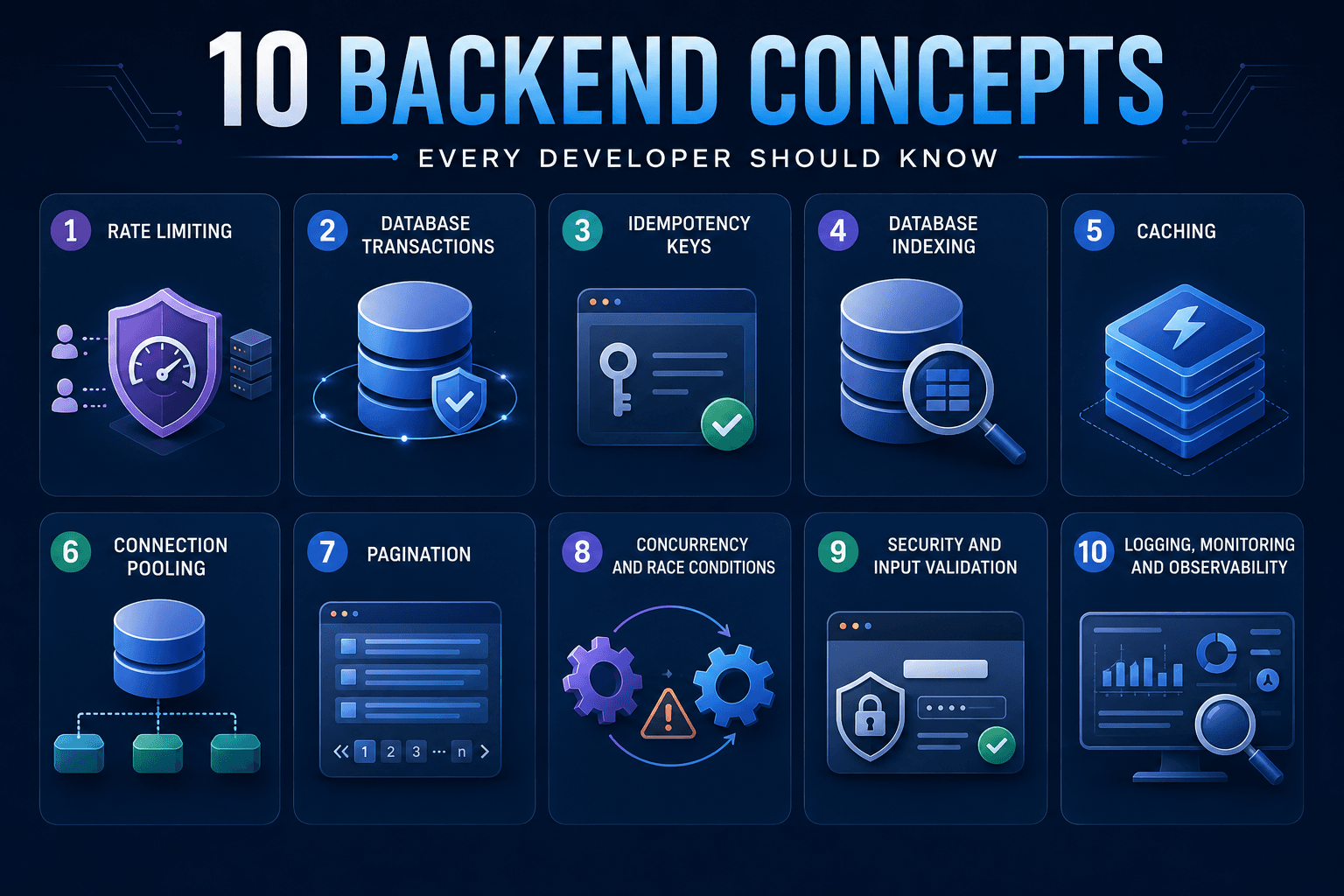
10 Backend Development Concepts Every Developer Should Know
Writing APIs is only part of backend development. These 10 concepts help developers build systems that remain reliable, secure and efficient in production.
Leave a Comment
Your email address will not be published. Required fields are marked *