••
Fed Rate Decision Today: Why a Hike to 3.75%-4.00% Is Widely Expected
The Fed is widely expected to raise rates 25 basis points to 3.75%–4.00% today, September 16, 2026. Here's why the hike is expected, what to watch at 2 p.m. ET, and what it means for borrowers and savers if confirmed.
Share Article:
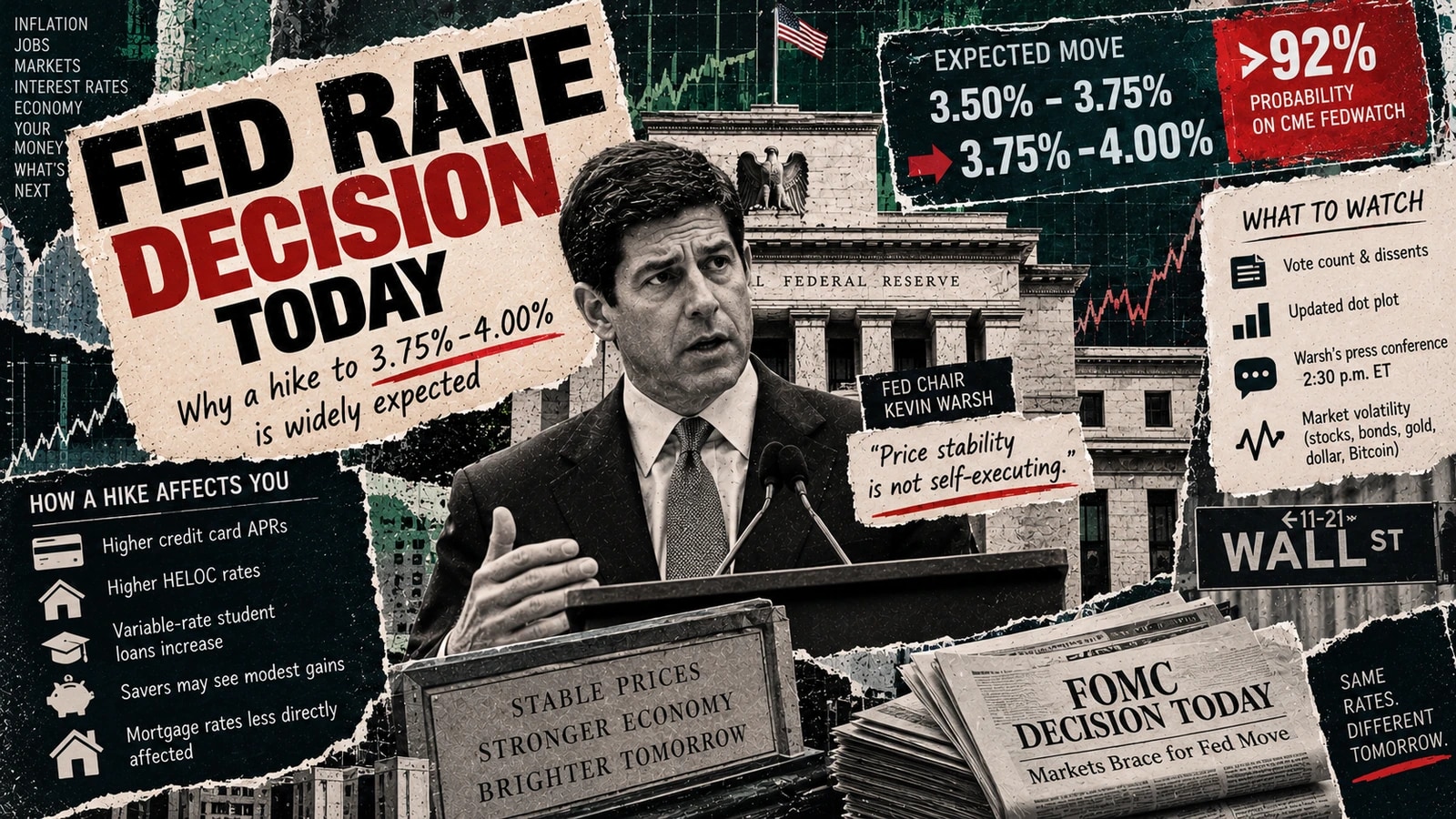
The Federal Reserve is widely expected to raise its benchmark rate by 25 basis points today, September 16, 2026, at 2:00 p.m. Eastern Time, lifting the target range from 3.50%–3.75% to 3.75%–4.00%. Traders on the CME FedWatch Tool have priced in a probability above 92% for the move, which would mark the Fed's first hike since 2023.
What's Expected and Why
The Federal Open Market Committee held rates steady at its July 29 meeting in a 9–3 vote, with Cleveland Fed President Beth Hammack, Minneapolis's Neel Kashkari, and Dallas's Lorie Logan dissenting in favor of a hike at the time. Since then, the case for tightening has strengthened.
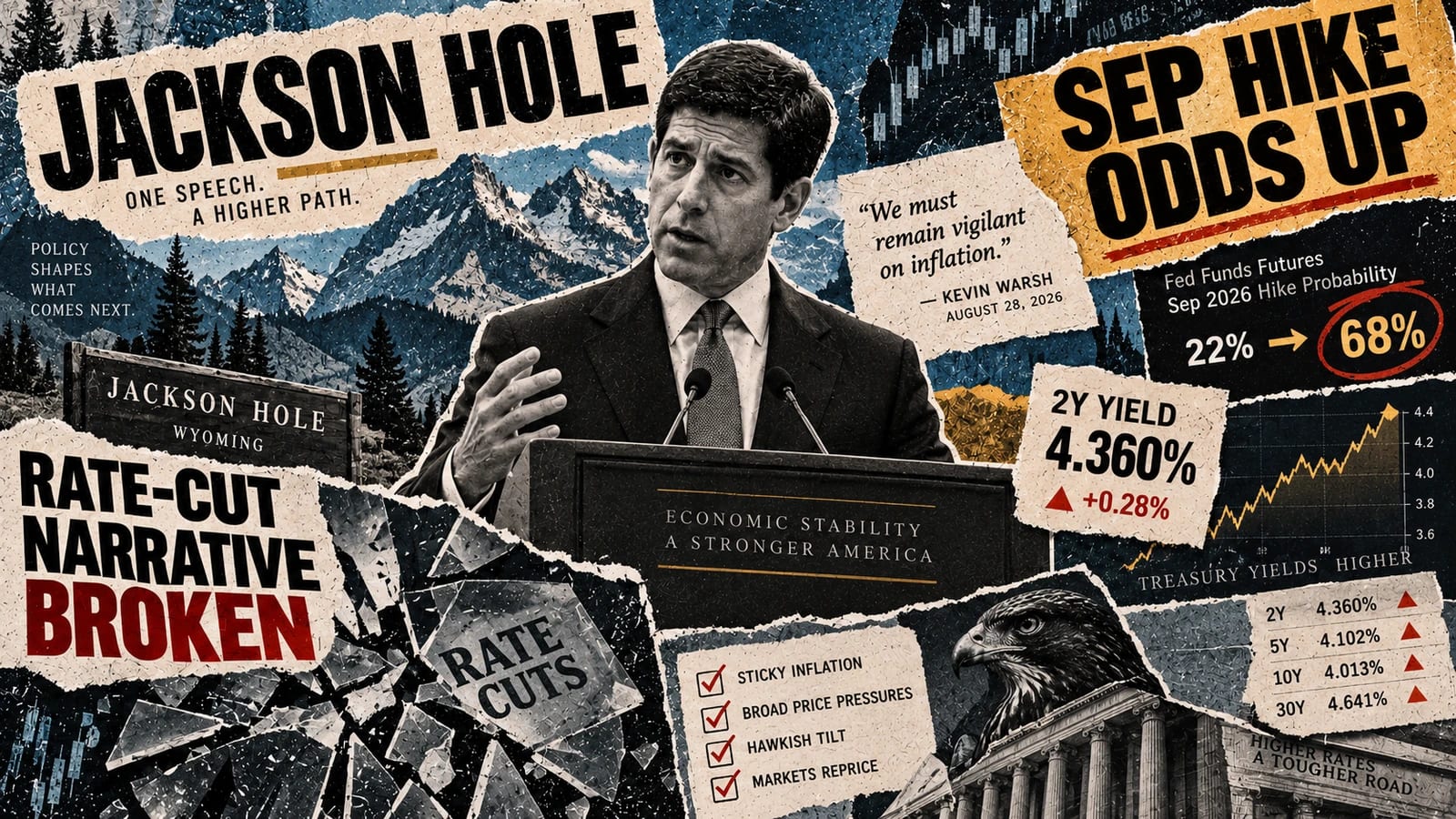
Fed Chair Kevin Warsh signaled the shift at the Jackson Hole symposium on August 28, telling attendees that "price stability is not self-executing" and that the committee needed to see inflation moving toward its 2% target "clearly and at sufficient speed." Markets read the speech as hawkish, and hike odds for September climbed in the weeks that followed.
August inflation data reinforced that view. The Bureau of Labor Statistics reported nonfarm payrolls up 162,000 for the month, with unemployment steady at 4.1%, removing one argument against tightening. A solid jobs report, combined with inflation still running above target, left the committee with less room to justify another hold.
What Happens at 2 P.M.
The rate announcement comes with a Summary of Economic Projections, since September is one of four meetings each year that includes an updated "dot plot" of individual officials' rate forecasts. Chair Warsh follows the statement with a press conference at 2:30 p.m. ET to discuss the decision and answer questions on the path ahead.
Warsh faces competing pressures heading into the announcement. Inflation data argues for tightening, while the White House has pushed for lower rates. How he frames the decision, and whether the dot plot signals further hikes before year-end, will likely matter more to markets than the rate move itself, since a quarter-point increase is already reflected in asset prices.
If the Hike Is Confirmed, Here's What Changes
A 25-basis-point increase would lift the prime rate to 7.25%, with credit cards, home equity lines of credit, and variable-rate private student loans adjusting close to immediately. Credit card APRs, already averaging above 20%, would move higher. Federal student loan borrowers with fixed-rate loans would be unaffected.
Savers would see a smaller, slower benefit. High-yield savings accounts paying near 4% could see modest increases, though the average traditional savings account, paying around 0.38%, would likely stay well below inflation regardless of the decision.
Mortgage rates are less directly tied to the fed funds rate and instead track the 10-year Treasury yield, which has already moved above 5% in anticipation of the decision. That means mortgage costs may not shift much on the announcement itself.
What to Watch After 2 P.M.
The rate decision matters less than what comes with it. Markets will be watching three things once the statement is released: the actual vote count and any dissents, the median dot plot projection for the rest of 2026, and the tone of Warsh's press conference. A dot plot that signals more hikes before year-end would be read very differently from one suggesting this move is a one-time adjustment.
Gold, Treasury yields, the dollar, and risk assets including Bitcoin are all positioned for volatility in the hour following the announcement, regardless of whether the outcome matches expectations.
Disclaimer: This article is for informational and educational purposes only and is not personalized financial, investment, or legal advice. Consult a licensed professional for advice specific to your situation.
Sources
From the Desk
All Crypto →More in Crypto

Clarity Act Vote Collapses After Last-Minute Split
The Clarity Act failed 49-to-50 in the Senate on September 15, 2026, after a last-minute breakdown over Trump ethics concessions and stablecoin rewards. Here's what happened and whether it can return.
Fresh Reporting
Browse All Stories →Latest from The Ledger
Clarity Act Vote Collapses After Last-Minute Split
The Clarity Act failed 49-to-50 in the Senate on September 15, 2026, after a last-minute breakdown over Trump ethics concessions and stablecoin rewards. Here's what happened and whether it can return.




Leave a Comment
Your email address will not be published. Required fields are marked *