••
Clarity Act Vote Collapses After Last-Minute Split
The Clarity Act failed 49-to-60 in the Senate on September 15, 2026, after a last-minute breakdown over Trump ethics concessions and stablecoin rewards. Here's what happened and whether it can return.
Share Article:
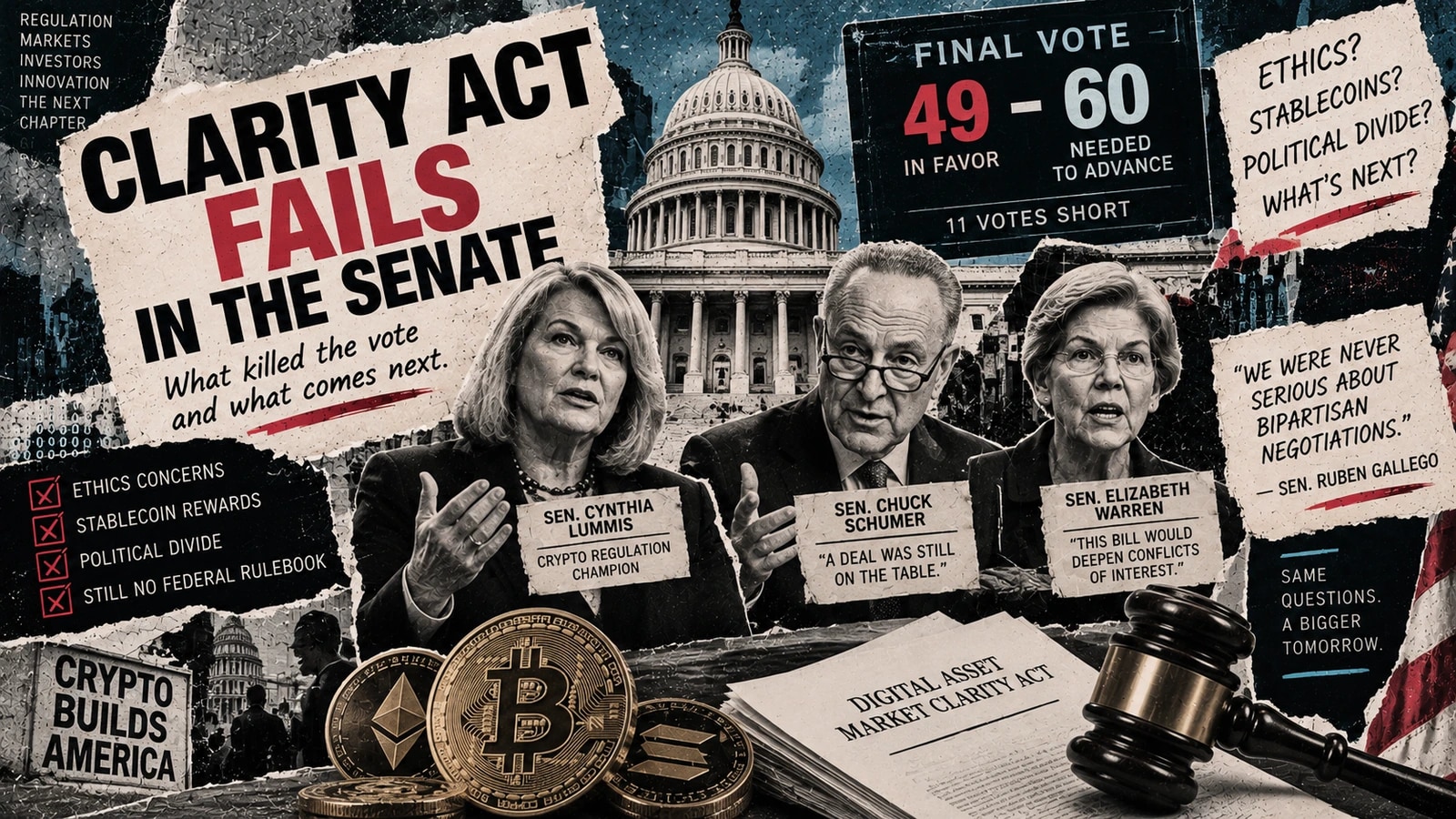
Clarity Act Fails in the Senate: What Killed the Vote and What Comes Next
The Digital Asset Market Clarity Act failed in the U.S. Senate on September 15, 2026, falling 11 votes short of the 60 needed to advance, with a final tally of 49 in favor. The collapse came after five years of work by Senator Cynthia Lummis and marked the most advanced attempt yet to pass federal crypto market structure legislation.
A Deal That Fell Apart at the Table
Republicans said they had offered their final compromise, including a second round of ethics concessions from President Donald Trump over his crypto holdings. Democrats disagreed, arguing the offer barely moved from where talks stood before the August recess and still let Trump avoid real accountability for conflicts of interest.
Senate Minority Leader Chuck Schumer said a bipartisan deal on ethics was still on the table Tuesday afternoon before Republican leadership walked away and forced the vote. Senator Ruben Gallego echoed that account, saying Republicans "were never serious about bipartisan negotiations."
Lummis rejected that framing entirely. In a statement after the vote, she called Democrats "anti-American" and said she had negotiated in good faith while they "played games."
Two Fights, One Bill
Beyond the ethics dispute, stablecoin rewards proved just as damaging. The bill's treatment of interest-bearing crypto rewards, seen by some banks as competing with deposit accounts, cost Republican support too. Senator Josh Hawley opposed the bill on those grounds last month, and Coinbase CEO Brian Armstrong had walked away from an earlier version of the legislation over the same issue, stalling it for weeks in the Senate Banking Committee.
Senator Elizabeth Warren, the top Democrat on that committee, opposed the bill throughout the process, warning it would deepen Trump's financial ties to the crypto industry, from which he earned more than USD 1 billion during his second term's first year.
What Happens Now
The failure does not end the effort. Republican Senator John Kennedy said the bill could return during the post-election "lame duck" session, a roughly four-week window between November's midterms and the winter recess. The House Agriculture and House Financial Services Committees issued a joint statement Tuesday saying they would keep pushing for legislation while working with federal regulators in the meantime.
The broader legislative track record still favors the industry more than in past years. The GENIUS Act, which set rules for stablecoin issuers, passed with strong bipartisan support in 2025. The Clarity Act itself cleared the House before stalling in the Senate, further than similar market structure bills have gone before.
For now, crypto firms are left without the federal rulebook they had hoped for, and will continue operating under a mix of agency guidance, enforcement actions, and state-level rules until Congress revisits the issue.
Disclaimer: This article is for informational and educational purposes only and is not personalized financial, investment, or legal advice. Consult a licensed professional for advice specific to your situation.
Sources
From the Desk
All Crypto →More in Crypto
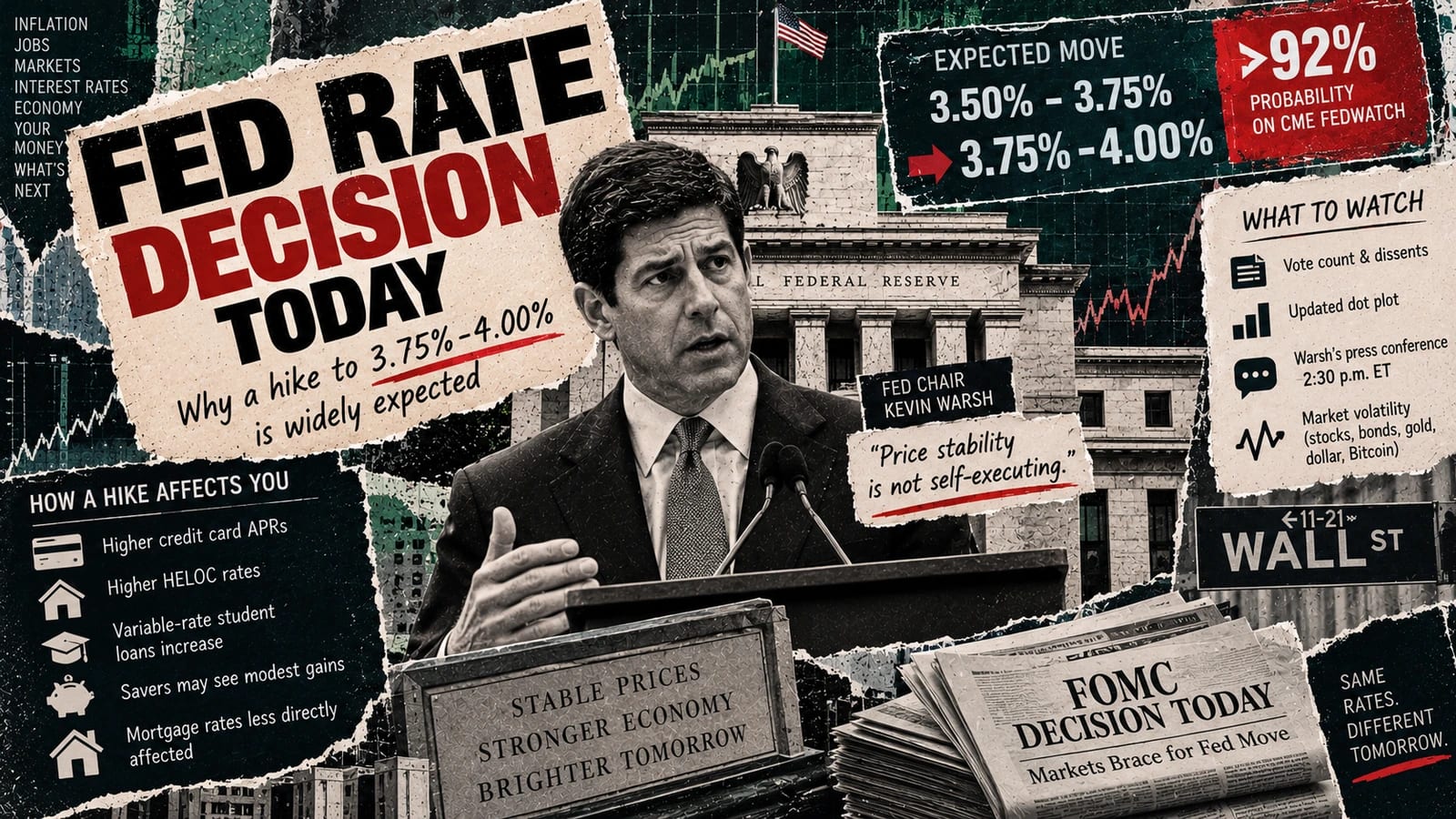
Fed Rate Decision Today: Why a Hike to 3.75%-4.00% Is Widely Expected
The Fed is widely expected to raise rates 25 basis points to 3.75%–4.00% today, September 16, 2026. Here's why the hike is expected, what to watch at 2 p.m. ET, and what it means for borrowers and savers if confirmed.

Fresh Reporting
Browse All Stories →Latest from The Ledger
Fed Rate Decision Today: Why a Hike to 3.75%-4.00% Is Widely Expected
The Fed is widely expected to raise rates 25 basis points to 3.75%–4.00% today, September 16, 2026. Here's why the hike is expected, what to watch at 2 p.m. ET, and what it means for borrowers and savers if confirmed.





Leave a Comment
Your email address will not be published. Required fields are marked *